Summer lawn care keeps most homeowners busy. Between mowing, watering, edging, and cleanup, the last thing you want is your mower bagger clogging every few minutes.
A clogged bagger chute doesn’t just slow you down. It can make mowing harder, reduce cutting quality, and leave grass clippings scattered all over your yard instead of neatly collected.
The good news? Most bagger clogs are easy to prevent once you understand why they happen and how to fix them. This guide breaks it all down in plain terms.
Why Does a Lawn Mower Bagger Chute Clog?
Before fixing the problem, it helps to know what causes it. In most cases, chute clogging comes down to grass conditions, mower setup, or maintenance issues.
Grass Is Too Tall or Too Wet
Tall grass bends over instead of standing upright, especially when it’s wet. Wet clippings stick together, clump up, and quickly block the chute.
Low Engine or Blade Speed
If your mower isn’t running at the right speed, the blades won’t create enough airflow to push clippings into the bag. That weak airflow is one of the most common causes of clogging.
Dull or Worn Blades
A dull blade tears grass instead of cutting it cleanly. Torn grass is heavier and more likely to stick inside the chute.
Mulching Plug or Kit Installed
Mulching kits are designed to keep grass circulating under the deck. If one is still installed while bagging, it can reduce airflow and cause clogs.
High Humidity or Damp Conditions
Even if it hasn’t rained, high humidity can keep grass slightly damp, which increases the chances of clogging.
How to Keep Your Lawn Mower Bagger From Clogging
A clogged bagger is frustrating, but most clogs are preventable with a few smart habits.
1. Always Use a Sharp Blade
A sharp blade cuts grass cleanly and evenly, creating lighter clippings that move easily through the chute. In general, mower blades should be sharpened at least once per mowing season, or more often if you mow frequently.
2. Mow Only When the Grass Is Dry
Dry grass flows smoothly into the bag. Wet grass sticks to the chute and clumps together. If you can, wait until late morning or early evening when dew has dried.
3. Don’t Let the Grass Get Too Tall
Following the one-third rule helps a lot. Never cut more than one-third of the grass height in a single pass. Shorter clippings move through the chute more easily and reduce stress on the mower.
4. Run the Engine at Full Throttle
Most walk-behind and riding mowers are designed to bag properly at full throttle. Higher blade speed creates stronger airflow, which keeps clippings moving instead of backing up.
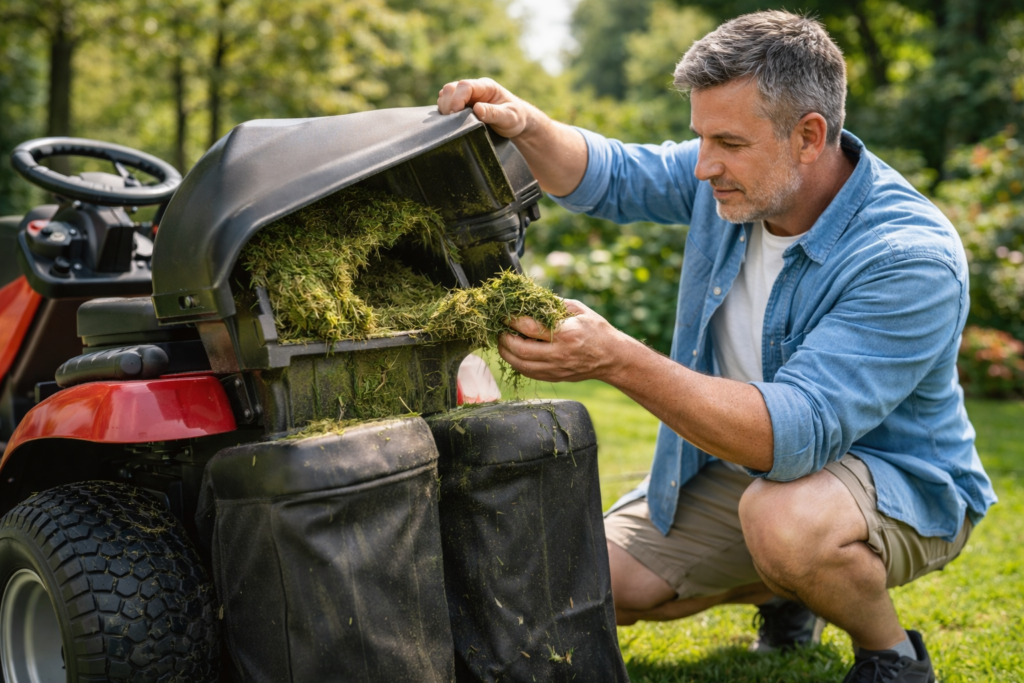
5. Empty the Bag Before It’s Full
Overfilling the bag is a common mistake. When the bag gets too full, airflow drops, and clippings start backing up into the chute. Empty it when it’s about two-thirds full.
6. Clean the Chute and Deck Regularly
Grass buildup inside the chute or under the deck makes clogging worse. After mowing, scrape out stuck clippings and let everything dry. A clean chute moves grass faster.
7. Check That the Mulching Plug Is Removed
If your mower has a mulching plug or plate, make sure it’s removed when using the bagger. Leaving it installed restricts airflow and almost guarantees clogging.
8. Mow at a Steady Pace
Moving too fast can overload the chute with grass. Slow down slightly, especially in thick or fast-growing areas of the lawn.
Extra Tips for Stubborn Clogging Problems
If your bagger still clogs often, try these additional steps:
- Apply a silicone spray or dry deck spray inside the chute to reduce sticking
- Raise the cutting height slightly during humid conditions
- Make sure the bag isn’t torn or clogged with fine debris
These small adjustments can make a big difference.